Cavity Wall vs Solid Wall Insulation: Diagnose Your Walls Before You Compare Costs
A cavity wall and a solid wall are not two prices for the same job. They are two different kinds of wall, built with different materials, and only one of the two main insulation methods will actually work on each one. Before any cost comparison makes sense, you need to know which wall you're actually looking at.
That diagnosis matters because walls account for a large share of the heat a poorly insulated home loses. The Energy Saving Trust estimates that around 33% of all heat lost in an uninsulated home escapes through the walls. The exact share depends on the building, but the principle holds wherever masonry walls are involved.
The cost and savings figures used further down come from UK benchmark sources — the Energy Saving Trust and UK Energy Partnership, both 2026 — not from Belgian or European price lists. Treat them as orders of magnitude that show the shape of the cost gap, not as a quote for your own home.
Key Takeaways
- Build era is a rough guide only: homes built before 1920 usually have solid walls, later ones usually have cavities — but some early cavities are too narrow to fill and should be treated as solid anyway.
- A cavity must measure at least 50mm and be free of rubble to take cavity-fill insulation; narrower or blocked cavities are unsuitable and can let water through.
- Cavity wall insulation is difficult to remove once it's in — removal needs a specialist company, so getting the diagnosis right beforehand is worth the time.
- UK audits of external wall insulation installed under government schemes have found widespread quality problems requiring remedial work — a reminder that installation quality matters as much as which method you choose.
How Do You Actually Know Which Wall Type You Have?
A cavity wall is built from two parallel masonry leaves with a gap between them — that gap is the void that cavity-fill insulation is pumped into. A solid wall has no such gap: it's a single thickness of brick, stone, or earth, and insulation has to be added to one face of it instead. The two methods aren't alternatives for the same wall; each is matched to a different structure. Here's a practical order to work through before calling anyone.
1. Check when the house was built. As a rough proxy, homes built before around 1920 tend to have solid walls, those from the 1920s onward tend to have cavity walls, and anything from the 1990s onward is usually already insulated. This is only a starting point: some pre-1920 homes do have cavities, but they're often too narrow to fill and are best treated as solid walls regardless.
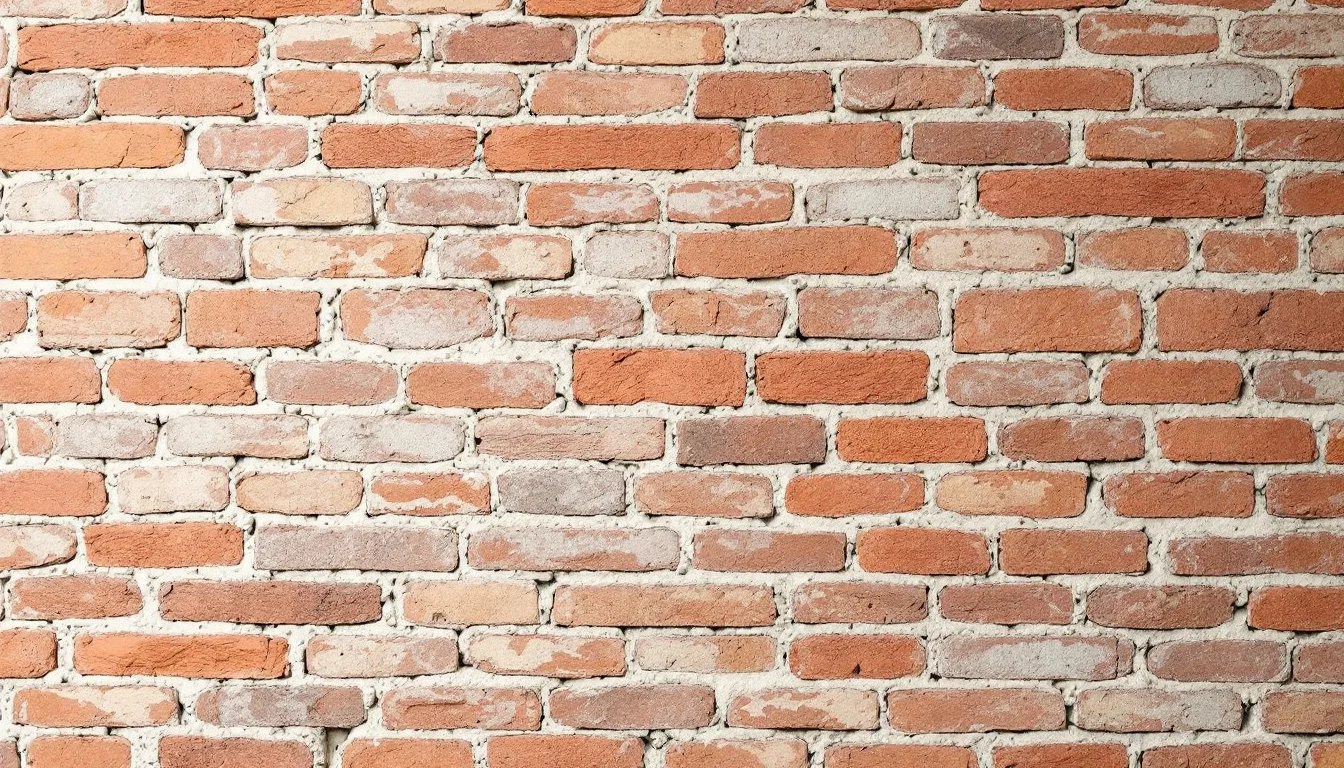
2. Look at the brickwork pattern. Where brick is visible, an even, lengthways pattern — every brick laid the same way — suggests a cavity wall. An alternating pattern, where you can see the short end of some bricks, suggests a solid wall built in a bonded pattern. If the wall is rendered or clad, this check doesn't work; move to the next step, or call a professional.
3. Measure the thickness at a door or window opening. A wall between 260mm and 350mm thick is likely a cavity wall. Under 260mm, it's probably solid. Stone walls can be solid at any thickness up to around 500mm, and earth walls — cob, rammed earth — run from 300mm to over a metre and are almost always solid.
4. If it looks like a cavity, check it's actually usable. Not every cavity can be filled. It needs to be at least 50mm wide and free of rubble or debris. A narrower or uneven cavity isn't suitable for filling, and insulating it anyway can let water through to the inner leaf.
If any of these checks are inconclusive, or the wall is rendered, clad, or otherwise hidden, don't guess. A borescope survey from a qualified installer settles the question and avoids the wrong method being applied to the wrong wall.
What Each Method Actually Does to Your Wall
Cavity fill
Once a cavity is confirmed and measured as suitable, the job itself is quick. An installer surveys the wall, drills a pattern of small holes from the outside, injects insulation into the gap, and makes good the holes. It isn't a DIY job. The material injected is usually polystyrene beads, which suit most homes; mineral wool fibre is a common alternative, while foam is used occasionally where standard cavity insulation isn't suitable.External wall insulation
On a solid wall, external wall insulation (EWI) works from the outside in: rigid boards are fixed to the outer face, then a base coat, a reinforcement mesh, and a weather-resistant finish are applied in layers. EPS is the more affordable board material, mineral wool costs more but gives better fire resistance, and phenolic foam is thinner for the same insulating value where space is tight. Because the boards and render add thickness to the wall, EWI also pushes out windowsills, gutters, downpipes, meter boxes and roof overhangs — all of which need adjusting, and all of which add to the bill beyond the insulation itself.Internal wall insulation and the moisture rule
Internal wall insulation (IWI) tackles the same solid wall from the inside, at the cost of some floor area and a full redecoration. Whichever face the insulation goes on, moisture management matters: solid walls built from traditional materials — brick, stone, earth — are often insulated with moisture-permeable products, though a correctly specified and installed vapour-control system can also manage dampness effectively; what matters is that the chosen approach suits the wall, since a mismatched system can trap damp behind the new layer.The reason any of this is worth doing comes down to physics: a thin single-brick or timber-framed wall loses heat faster than a modern, already-insulated cavity wall. That's also why diagnosis comes first — the wall you actually have decides not just which method is possible, but how much there is to gain from doing it at all.
The Real Cost Gap: What the UK Numbers Show (and Why They're Not a Belgian Price Quote)
Setting the two families of methods side by side on the same criteria shows why the diagnosis, not personal preference, decides which door is open:
| Factor | Cavity fill | External wall insulation | Internal wall insulation |
|---|---|---|---|
| Suitable for | Cavity ≥50mm, rubble-free | Solid walls | Solid walls |
| Typical GB cost (3-bed semi) | ~£2,200 | ~£15,000 | ~£12,000 |
| Installation time / disruption | Minimal disruption | Exterior work | Room-by-room, redecoration needed |
| Reversibility | Hard to remove once installed | Effectively permanent | Effectively permanent |
| Visual change | None visible | Changes wall depth and exterior appearance | None to exterior; reduces internal room size |
The cost figures are UK benchmarks from the Energy Saving Trust and UK Energy Partnership (2026); a Belgian or European quote will differ with local labour rates and material supply.
Putting cost against the estimated yearly saving for gas-heated homes turns these figures into a payback period — simply cost divided by saving. For cavity fill, across the five GB property types in the source data:
| Property type | Typical cost | Estimated yearly saving | Payback |
|---|---|---|---|
| Flat | ~£950 | ~£110 | ~9 years |
| Mid-terrace | ~£1,100 | ~£110 | ~10 years |
| Bungalow | ~£1,700 | ~£160 | ~11 years |
| Semi-detached | ~£2,200 | ~£200 | ~11 years |
| Detached | ~£3,900 | ~£380 | ~10 years |
That semi-detached figure matches the one worked example UK Energy Partnership (2026) gives directly: roughly 11 years to repay £2,200 at £200 a year in savings.
Solid walls don't have cost data broken down by property type in the same way — only the 3-bed semi figures (~£15,000 for EWI, ~£12,000 for IWI) are grounded in a specific benchmark. Applying that same semi-level cost against the estimated savings for other property types gives an illustrative — not quoted — sense of scale:
| Property type | Estimated yearly saving | Payback at ~£15,000 (EWI) | Payback at ~£12,000 (IWI) |
|---|---|---|---|
| Mid-terrace | ~£150 | ~100 years | ~80 years |
| Bungalow | ~£220 | ~68 years | ~55 years |
| Semi-detached | ~£280 | ~54 years | ~43 years |
| Detached | ~£500 | ~30 years | ~24 years |
This extrapolation should be read with caution, because solid-wall insulation cost scales with wall area and perimeter, not just dwelling type — a detached solid-wall house will cost more than £15,000 to insulate in practice, which would lengthen its real payback well beyond the 30 years shown here. What the numbers do establish clearly, even on the semi alone, is the order of magnitude: roughly 9 to 11 years for cavity fill against roughly 43 to 54 years for solid-wall insulation. That gap is structural, tied to the wall type itself, not something a cheaper installer can close. It's also why cavity wall insulation being hard to remove once installed matters: a quick, low-cost decision still locks in a wall build-up for decades.
Anyone in Belgium or elsewhere in Europe weighing the same choice should treat these as a shape, not a price list, and get quotes from local installers before deciding.
Why a Good Diagnosis Isn't Enough Without a Proper Survey
A diagnosis using the checks above is a strong starting point, but it isn't the same as a professional survey. Before any cavity is filled or any board goes up, installers normally check a wider set of things:
- cavity width and the presence of rubble, checked with a borescope
- existing damp in the wall
- the condition of brickwork, pointing, roofs and gutters
- exposure to driving rain or flood risk
- airbricks and vents that need to stay clear for ventilation
Those are UK figures tied to UK schemes, but the underlying lesson isn't location-specific: a correctly diagnosed wall can still end up badly insulated if the survey is rushed or the materials are wrong for the wall. Before signing anything, ask for the guarantee terms in writing. In the UK, standard guarantees run 25 years, backed either by an industry body — CIGA for cavity fill, SWIGA for solid wall insulation — or by insurance. The Energy Saving Trust recommends getting at least three quotes and refusing unsolicited cold callers offering to carry out the work. That's a due-diligence habit worth applying anywhere, not a legal requirement specific to one country.