How a Gravity Drain System Works and Where It Fails
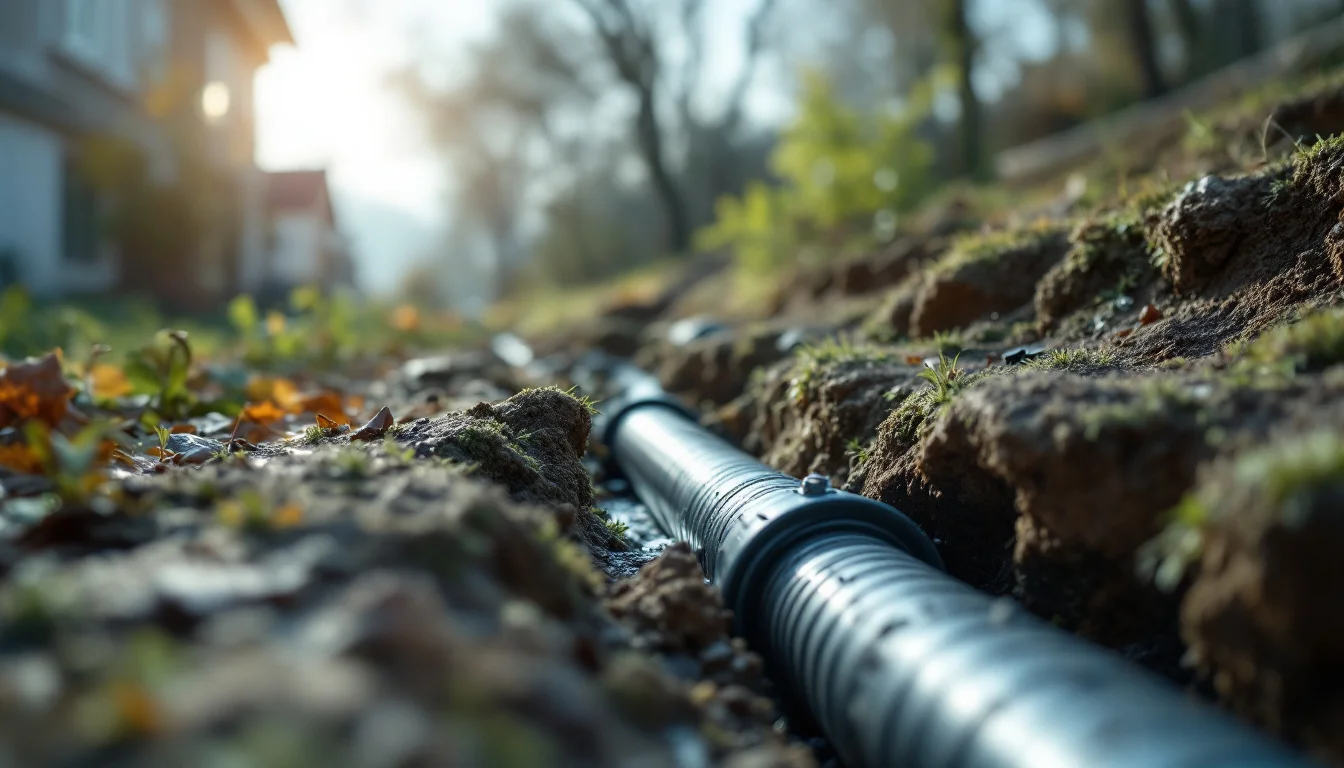
A gravity drain system has no pump, no motor, no moving parts. It has one job: let water and waste fall downhill, from the house to a sewer main or a lower point in the garden. That simplicity is also its weak spot. Because nothing pushes the water along, the whole system depends on a single condition staying true along its entire length — a continuous, correctly angled drop. Break that condition anywhere, inside a pipe or across a slope of lawn, and the system stops doing its job, or starts doing damage instead.
This article looks at both halves of that downhill path: the buried pipe that carries wastewater, and the graded soil above and around it that carries rainwater and groundwater. The failure points are physical, not regional — a plumber in Liège and an engineer in California are fighting the same forces. Exact minimum slopes and pipe specifications are set by local plumbing codes, so always check those with a plumber or the applicable technical standard before digging.
Key Takeaways
- A gravity drain fails in only a few distinct ways, whether it's a pipe or a slope — most problems trace back to a break in the downhill path.
- Slope can fail in both directions: too flat and flow stalls, too steep and liquids outrun solids.
- Ground movement, rock, and site layout can all make the required slope physically impossible to build.
- The same groundwater that complicates pipe installation also drives slope failure, and improper water management behind retaining walls is a leading cause of wall failure, per Vitoli Landscape Design.
- A blocked or badly designed drain can redirect water somewhere worse.
How Does a Gravity Drain System Actually Work?
Underground, gravity drainage moves wastewater and waste along pipes toward a municipal sewer main or a lower collection point, relying entirely on a continuous downward slope built to a specified grade, according to Evac's guide on vacuum drainage versus gravity drainage for underground and below-grade construction. There is no backup mechanism. If the slope is right, the system generally runs with minimal upkeep. If it isn't, there is nothing else carrying the load.
That single requirement — a steady drop, start to finish — is harder to deliver below grade than it sounds. Foundations, existing utilities, structural footings, bedrock, or simply the elevation of the building site can all eat into the vertical space a pipe needs to fall correctly, the same source notes. On a tight renovation site, there may not be enough depth left to run a pipe at the right angle all the way to the connection point without very costly excavation. That constraint is the root of nearly every failure described below.
The Six Points Where a Drain Pipe Fails
Most pipe-side failures come down to getting the slope, the ground, or the connection point wrong. Evac's guide on gravity drainage for below-grade construction groups the common causes as follows:
- Too little slope. Evac's guide on gravity drainage for below-grade construction cites a benchmark of around a quarter-inch of drop per foot for small-diameter pipes. Below that, flow can slow down or stop moving altogether. Local plumbing codes may set a different minimum, so confirm the exact figure with a plumber or the applicable standard before digging.
- Too much slope. Water runs ahead of solid waste instead of carrying it along, leaving solids behind in the pipe. Large elevation drops also push flow velocity too high, which can erode or abrade the pipe over time.
- Ground movement. Shifting clay, erosion, or freeze-thaw cycles can crack or displace pipe sections and create low spots where waste and sludge settle instead of flowing on.
- A high water table. Groundwater pressing against a trench can make it impossible to lay pipe correctly until the site is dewatered and the trench walls are stabilised.
- Wrong invert elevations. If the pipe's entry and exit heights are set incorrectly, gravity flow is disrupted — sometimes badly enough to force a redesign, partial demolition, or a switch to another drainage method.
- Bedrock or rock obstructions. Rock in the path of the trench can force blasting or cutting, which adds cost and makes it harder to hold the required alignment.
Beyond the Pipe: Why the Same Water Threatens Both Systems
The water table is where the pipe-engineering problem and the soil-stability problem turn out to be the same problem. On the plumbing side, a high water table means dewatering and trench stabilisation before a sloped pipe can even be installed, as Evac's below-grade drainage guide notes. On the soil side, water-saturated ground loses shear strength — the mechanical grip that holds a slope together — and this is described as a major contributing factor in slope failure on residential hillside properties, with the actual severity depending on soil type, slope angle, and drainage conditions, according to Vitoli Landscape Design's guide on drainage and slope stability.
It's the same water, acting on the same site, through two different materials. A homeowner with a sluggish basement drain and a homeowner with a damp, slowly cracking backyard slope may be dealing with the identical rise in groundwater, just expressed through different symptoms.
That also means a drainage fix has to match the actual condition on site, not a generic template. The California Department of Transportation, cited in Vitoli's guide, makes the point bluntly for slope drainage: pipes installed into a slope with very little groundwater accomplish nothing, because the fix has to be sized to the groundwater that is actually there, confirmed by field investigation rather than assumed. The same logic explains why gravel backfill, perforated drain lines, and weep systems are treated as standard rather than optional behind retaining walls — improper water management there is a leading cause of wall failure, per the same guide.
Three Ways to Manage Water Around a Home (and What Each One Can't Do)
Away from the pipe network, site drainage around a house generally falls into three categories, as described in Vitoli Landscape Design's guide on drainage and slope stability: surface, subsurface, and horizontal drains. Each addresses a different layer of the same water problem, and none of them substitutes for the others.
| Type | What it manages | What it can't do |
|---|---|---|
| Surface drainage | Rainwater and runoff moving across the ground | Does nothing for groundwater already inside the slope — rarely enough on its own on clay-heavy or steep terrain |
| Subsurface drainage | Groundwater moving through soil near the surface, usually via perforated pipe | Needs correct depth and gradient to intercept water before it reaches a foundation or wall |
| Horizontal drains | Groundwater deeper inside a slope, drawn out through drilled drain holes | Loses effectiveness as holes silt up over time; not a one-time installation |
The practical implication is that regrading a yard to shed rainwater — a common and relatively cheap fix — solves only the surface problem. If the real issue is groundwater already saturating a clay slope, that work leaves the underlying cause untouched. It's also worth remembering that a drain that fails doesn't necessarily go quiet. A clogged or collapsed drain outlet can actively redirect water in ways that make the original problem worse, the same guide warns, rather than simply stopping and leaving the site as it was before.
When Gravity Can't Work at All
Sometimes the site simply doesn't allow the slope a gravity system needs — not because of a mistake, but because the building sits below the level it would have to drain to. In those cases, some below-grade projects use vacuum drainage instead: negative pressure in small-diameter pipes pulls waste along horizontally, uphill, or through ceiling voids, rather than relying on a continuous downward trench, according to Evac's guide on vacuum versus gravity drainage.
The clearest illustration of that trade-off, cited in the same guide, is a UK project: Zedwell Hotels in London built 207 bedrooms entirely below the level of the public sewer, where gravity drainage could not physically work. The vacuum system used there is reported to save more than 2.5 million litres of water a year compared with conventional toilets. It's a commercial-scale example from outside Belgium, not a residential benchmark — but it shows, at the extreme end, exactly why slope matters so much in the first place: take it away, and an ordinary gravity drain simply has nothing left to work with.
FAQ
How long does it take for a drainage fix to actually dry out a slope? In clay soils, water-table improvement after a drainage intervention tends to happen slowly and unfold over multiple years rather than all at once, with the actual pace depending on soil conductivity, site geometry, and drainage conditions, according to USGS data cited in Vitoli Landscape Design's guide on drainage and slope stability. A slope that still looks damp a few months after work is done is not necessarily a sign that the fix failed.
How often do horizontal drains need attention? The same guide, citing USGS and Caltrans findings, notes that uncleaned horizontal drain holes lose a substantial share of their original effectiveness over time as they clog, though the exact extent varies widely by site, design, and age. That's why refurbishing is built into how these systems are maintained, rather than treated as a one-off job.
What actually decides which drainage approach suits a given garden or slope? According to the same source, five site-specific factors matter most: the angle and height of the slope, the soil type and its permeability, the depth of the groundwater, how much seasonal water load the site accumulates, and how close the drainage work sits to structures or utilities. A method that works well on one of these points can still fail if another one is ignored.
Conclusion
Seen this way, a gravity drain isn't really a pipe or a ditch — it's a path, and paths can be broken in more places than people expect. The more useful question for anyone troubleshooting a slow drain or a soggy slope isn't "is there a drain here," but "where, exactly, has the downhill path stopped being downhill." That question tends to point straight at the fix, long before any digging starts.