Small Finishing Details That Transform Your Space

The Finishing Detail Nobody Names When They Say a Room 'Looks Professional'
Walk into a freshly painted room and something either clicks or it doesn't. The colour might be right, the lines might be straight, and yet the room still reads as a weekend job rather than a finished space. Most people blame the paint colour, the brushwork, or the brand. Rarely do they blame the sheen.
Sheen is the setting that decides how light moves across every wall, door and ceiling in the room. Get it wrong and small imperfections announce themselves under any lamp or window. Get it right, consistently, and the room looks calm and deliberate even before anyone notices the colour. This is the one finishing variable worth understanding properly before the next tin gets opened.
Key Takeaways
- Sheen measures how much light reflects off a painted surface — a measurable physical property that behaves independently of colour choice.
- Interior finishes typically run on a seven-point scale from no shine to high shine: flat, matte, eggshell, pearl, satin, semi-gloss, high gloss.
- Flat paint is forgiving on flawed walls but risky in hallways, since scrubbing a stain can burnish the surface into a shiny patch.
- High gloss reflects the most light and will accentuate any bump, ridge or brush mark underneath it.
- Some renovators deliberately pick one sheen for an entire room rather than matching sheen to each surface.
What Sheen Actually Does to a Surface (It's Physics, Not Taste)
Sheen describes how a cured paint film reflects light that hits it, measured as the degree of specular, mirror-like reflection rather than how much total light bounces back. Nothing more mystical than that. A flat finish scatters light diffusely in every direction, so it doesn't throw a sharp reflection back at the eye. A high gloss finish does the opposite, acting almost like a mirror and sending light straight back out in a concentrated, directional way.
This single mechanism explains everything that follows in a paint aisle. Because flat paint scatters light diffusely rather than reflecting it directly back, the eye has less concentrated light to use when picking out irregularities like ridges, filler marks, and uneven plaster — surface imperfections become easier to miss. The same wall painted in a glossy finish would throw light unevenly off every one of those same bumps, making them obvious from across the room.
None of the sheen choices further along this scale are really about decoration preference, even though they get sold that way. They are about how much a surface's underlying texture gets exposed by light, and how much it gets quietly absorbed instead. Everything from here is a trade-off built on that one fact.
The Sheen Ladder: Flat to High Gloss, and What Each Trade-off Buys You
Interior paint finishes are commonly grouped into a seven-point ladder — the model used by manufacturers such as Benjamin Moore — running from no shine at all to a mirror-like top end. Climbing that ladder buys durability and washability, but it also buys exposure: the higher the sheen, the more honestly a surface has to be prepped, because gloss has nowhere to hide a flaw.
| Finish | Sheen level | Recommended areas | Trade-off |
|---|---|---|---|
| Flat | No shine | Ceilings, low-traffic walls | Very forgiving of surface flaws, but stains are hard to lift and scrubbing can burnish a shiny patch |
| Matte | Barely any shine | Hallways, family rooms | Nearly as flaw-forgiving as flat, but withstands frequent washing |
| Eggshell | Low sheen | Living rooms, bedrooms, most general walls | Far more durable than flat or matte while staying close to shine-free |
| Pearl | Medium gloss | Trim, high-traffic walls | Adds dimension and holds up well, but shows lap marks and application flaws more readily |
| Satin | Higher gloss than eggshell | Windows, shutters, interior doors, front doors | Better stain resistance and shows off bevelling and panelling detail |
| Semi-gloss | High gloss | Millwork, trim, kitchen cabinets | Cures to a smooth, almost furniture-like surface, but needs careful prep underneath |
| High gloss | Mirror-like | Doors, trim, heavily used kitchens | Extremely durable and easy to clean, but magnifies every imperfection in the surface beneath it |
Read that table as a spend-versus-forgiveness curve rather than a ranking. Flat and matte ask the least of a wall's surface condition and the least of the painter's prep work. Semi-gloss and high gloss ask the most of both, but reward that effort with a finish that cleans up with a damp cloth and holds its colour under heavy daily contact — the reason doors, trim and cabinet fronts are so often pushed toward the top of the ladder while open wall surfaces stay lower down.
Should You Match Sheen to Surface, or Use One Sheen Throughout?
The logic behind the ladder points toward matching sheen to function: a durable semi-gloss on trim to catch the light and create dimension, something quieter on the walls around it, flat overhead where nobody runs a hand across the ceiling. That is the manufacturer's-grid approach, and it makes technical sense surface by surface.
But in one widely read Houzz discussion thread, several contributors land somewhere else entirely. One view offered in that thread is to pick a single sheen for an entire room rather than mixing finishes, particularly in a small room or one painted in a deep, saturated colour — the reasoning being that switching sheen between wall, trim and ceiling breaks up a colour that is meant to read as one continuous surface. A related comment in that same thread described colour-drenching a whole house in white eggshell across walls, ceiling and trim: durable, nearly shine-free, and avoiding a patchwork of different reflectivities. Another contributor goes further still, carrying the same colour and sheen partway through the trim and door mouldings rather than switching sheen at every edge.
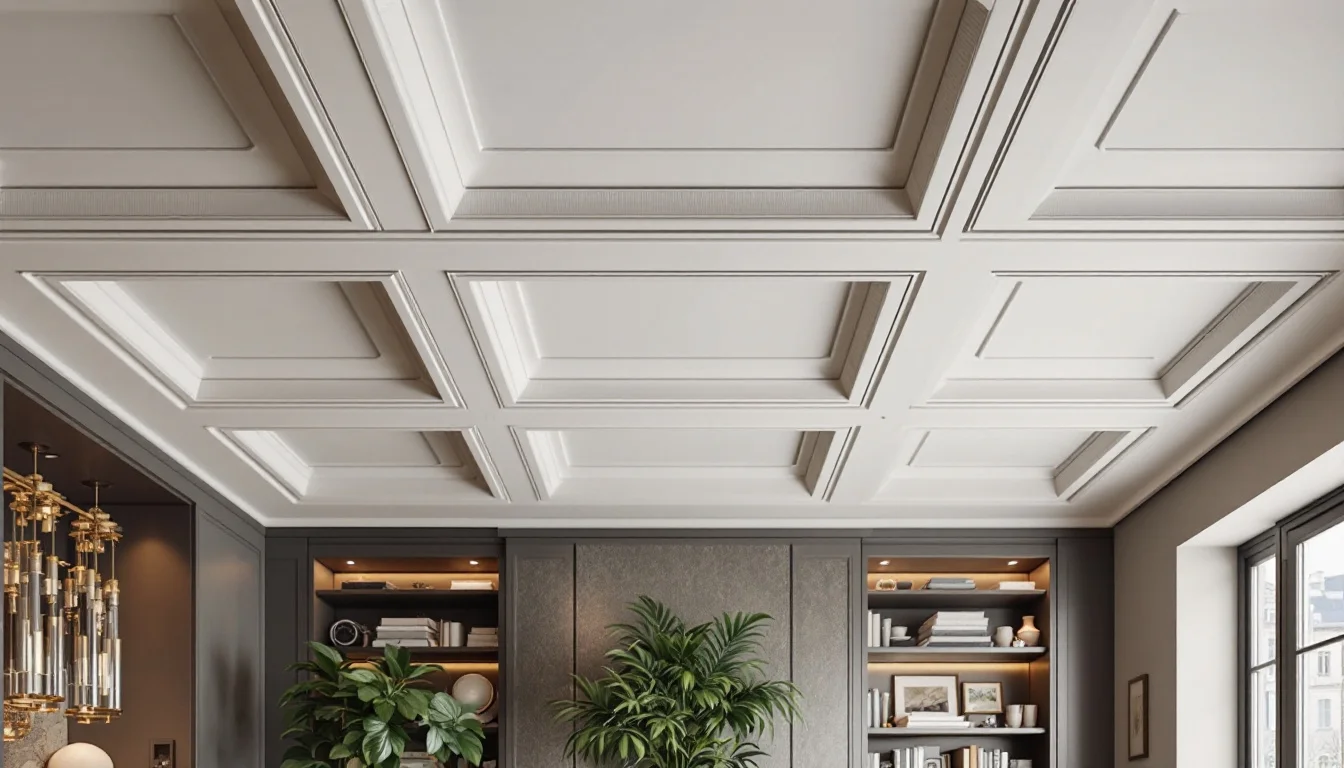
Both approaches are defensible; they just answer different questions. Matching sheen to surface earns its keep when a room has architectural detail worth lifting out — panelled doors, deep skirting, window surrounds — because a jump in sheen is exactly what makes those details readable. A single sheen throughout earns its keep when the room is small, the colour is dark or saturated, or the goal is a calm, enveloping space rather than a room full of individually highlighted parts.
Before buying a tin, it helps to run through a few questions rather than picking a sheen off instinct:
- Is the surface genuinely smooth? Rough or uneven walls fare better lower on the ladder, since sheens above satin leave little room to hide texture.
- Will it get washed or touched often? Door frames, skirting and hallway walls take hands and knocks; low sheens there risk burnishing under repeated cleaning.
- Is the room wet or humid? Bathrooms and similarly damp rooms call for a finish built to resist moisture and mildew rather than a decorative sheen choice alone.
- Do you want the trim to pop, or to disappear? That single preference decides whether sheen should jump between surfaces or stay level throughout the room.
Frequently Asked Questions
Why is flat paint risky in a busy hallway? Flat paint holds stains more stubbornly than higher-sheen finishes, and scrubbing at a mark can rub the surface into a shiny, burnished patch that never quite matches the rest of the wall again. In a hallway that gets scuffed daily, that trade-off tends to show up within months rather than years.
Does a glossy finish really show every flaw on the wall? Yes — it is the direct consequence of reflecting more light back at the viewer. Because of that, high gloss is best reserved for surfaces that are already smooth, and careful surface preparation before painting matters more here than with any other finish on the ladder.
Can a glossy finish ever work on a ceiling? It can, but it is an advanced move rather than a default choice. Some designers and homeowners do use high gloss on a ceiling or a single accent wall for a deliberate, dramatic effect, but it only works if that surface is flawless, since gloss overhead reflects light from every angle in the room.
What sheen suits a bathroom or another humid room? Moisture-exposed rooms don't necessarily need a high-sheen finish. A matte paint formulated specifically for durability, colour retention and mildew resistance can hold up in a humid bathroom without pushing the sheen level up the ladder.
Is it worth paying more for a higher sheen on trim alone? Often yes — trim and door frames take far more physical contact than open wall space, and that wear is exactly what higher-sheen finishes are built to resist, so the extra durability tends to pay for itself over time.
Conclusion
Sheen rarely gets discussed on its own because it hides behind colour choice in most conversations about paint. But it is the variable doing the quiet work of making flaws visible or invisible, long after the colour has been agreed on. The more interesting question going forward isn't which sheen is objectively best, but whether a given room is being asked to showcase its architectural details or to disappear into one calm surface — because that answer, more than any product chart, is what should decide where sheen changes and where it doesn't.